

Teaching guideChords & harmony
How to teach figured bass
Figured bass looks like a code, a column of small numbers under a bass note, but it rests on one simple idea: each number is an interval above the bass. Students who learn that idea can read every figure they meet, from the 6 of a first-inversion triad to the 4/2 of a seventh chord in third inversion. This guide teaches figured bass for triads first, then seventh chords, accidentals in figures, and how figures combine with Roman numerals in analysis.
Teach the one rule: intervals above the bass
Every number in a figured bass is an interval measured up from the bass note, using the notes of the key. A 6 means a note a 6th above the bass; a 3 means a note a 3rd above it. The figures describe what sits above the bass, not the root of the chord.
Give a little history to make the code feel purposeful. Baroque keyboard players read a bass line with figures and filled in the chords themselves, the way a jazz pianist reads chord symbols today.
Figures for triads and their inversions
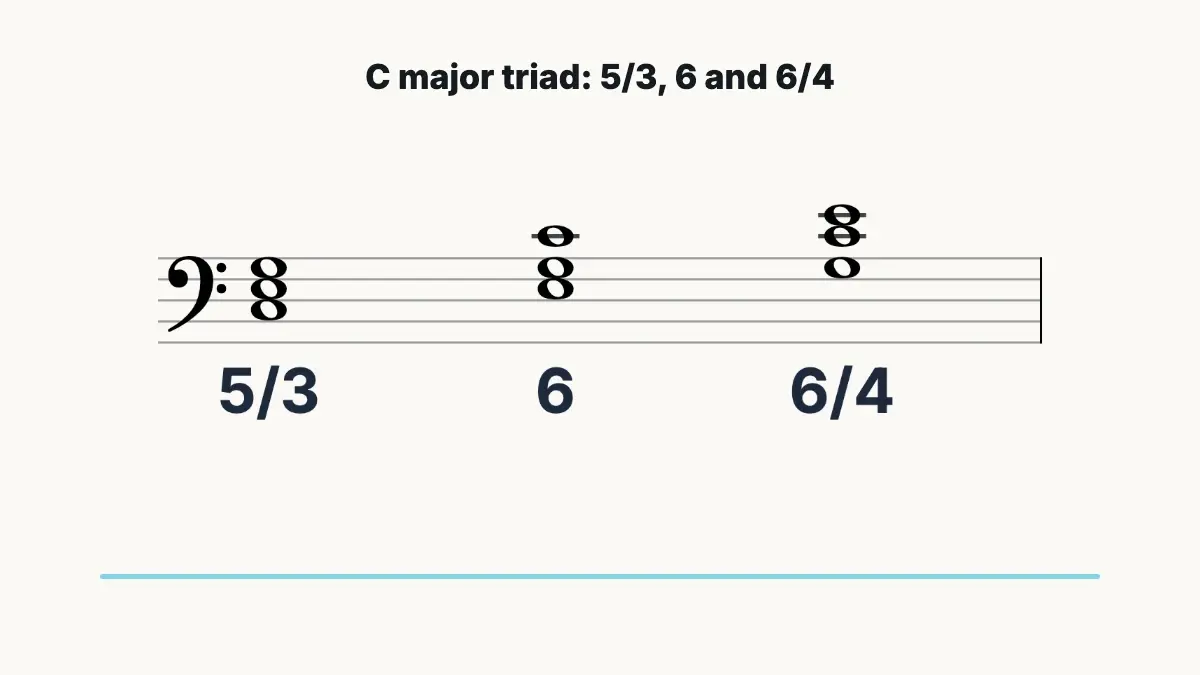
A root-position triad has a 3rd and a 5th above the bass, so its full figure is 5/3. Because it is so common, it is usually left blank. A first-inversion triad, with the third in the bass, has a 3rd and a 6th above it: 6/3, shortened to 6. A second-inversion triad, with the fifth in the bass, has a 4th and a 6th above it: 6/4.
Work through one chord in all three positions. In C major, C–E–G is 5/3, E–G–C is 6, and G–C–E is 6/4. Have students measure each interval above the bass for themselves before they memorize the short forms.
Figures for seventh chords
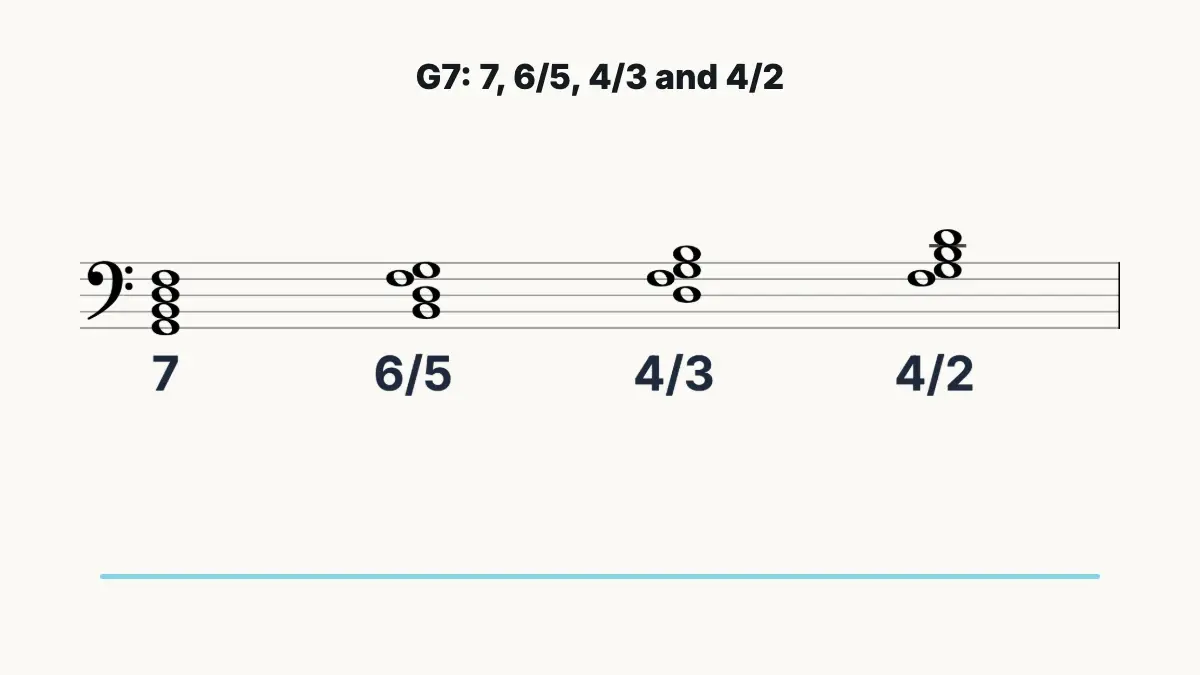
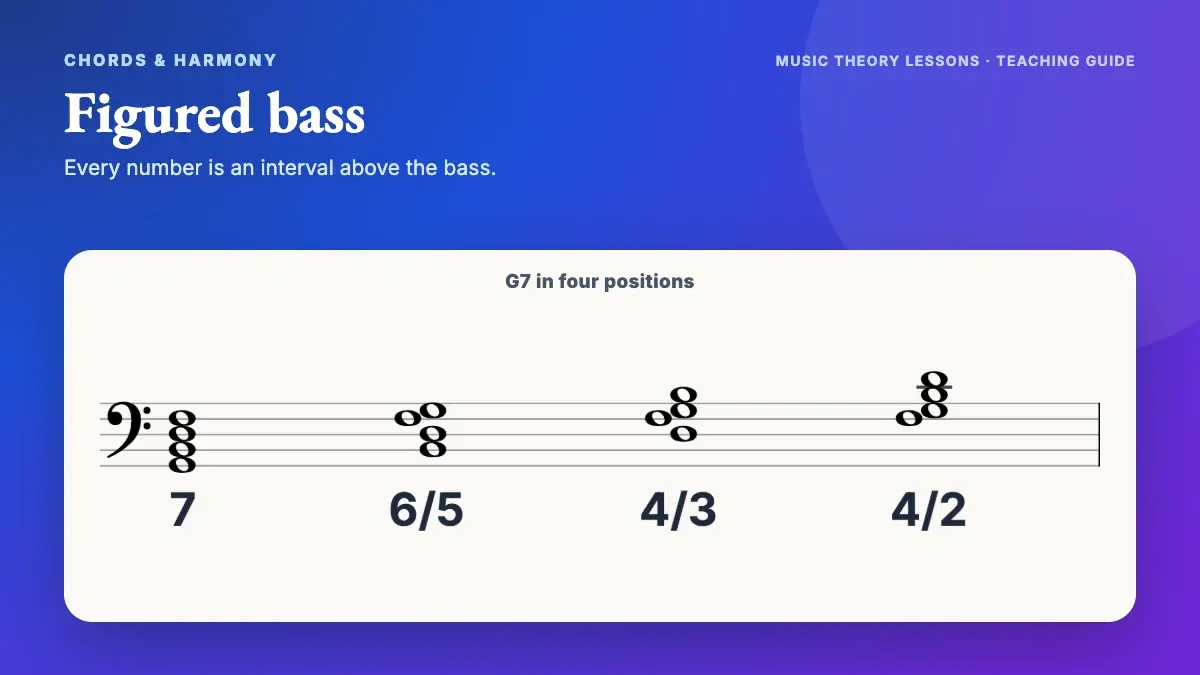
Seventh chords add a fourth position. In root position the figure is 7. In first inversion it is 6/5, in second inversion 4/3, and in third inversion 4/2, sometimes written simply as 2.
Use G7 as the model. G–B–D–F is 7. With B in the bass, the notes above are a 3rd, 5th, and 6th, so the figure is 6/5. With D in the bass, they are a 3rd, 4th, and 6th, so the figure is 4/3. With F in the bass, they are a 2nd, 4th, and 6th, so the figure is 4/2. Each short form keeps the intervals that make that position unique.
Find the chord from the bass and figures
To read a figured bass, students write the bass note, add the notes the figures ask for above it, and then stack those notes into thirds to find the root and quality. A bass of E with a 6 gives E, G, and C, which stack as C–E–G: a C major triad in first inversion.
Practice the reverse as well: give a chord in a named inversion and have students write the figure. Moving in both directions is what makes the figures stick.
Accidentals in the figures
Figures can carry accidentals. An accidental on its own, with no number, applies to the 3rd above the bass, so a sharp under a bass note raises its 3rd. An accidental beside a number alters that interval, and a slash through a number or a plus sign beside it means the note is raised.
These marks appear most often in minor keys, where the raised leading tone has to be shown. A sharp under a dominant bass note in A minor, for example, tells the player to use G♯ instead of G.
Combine figures with Roman numerals
In harmonic analysis, the figure follows the Roman numeral. V6/5 is a dominant seventh chord in first inversion, ii6 is a supertonic triad in first inversion, and I6/4 is a tonic triad in second inversion, often used before V at a cadence.
Students who understand that the numeral names the chord and the figure names the bass position can label any chord in a passage.
Realizing a figured bass
Writing the upper voices from a figured bass is called realizing it, spelled realising in British books. For most classes, reading and labeling figures is the main goal. With older students, add short exercises where they write the chord above each bass note in close position before tackling full four-part writing.
Common figured bass mistakes
The most common mistake is measuring the figures from the root instead of the bass. Others are mixing up 6/4 and 4/3, forgetting that a blank figure means 5/3, and thinking a 7 refers to the 7th degree of the scale rather than a 7th above the bass.
Have students write the bass note first and count up from it every time, until the short forms are automatic.
A one-week practice plan
Monday: the intervals-above-the-bass rule and triad figures. Wednesday: seventh chord figures, with a figured bass chart students make themselves. Friday: accidentals in figures and combining figures with Roman numerals.
The Music Theory Teacher’s Book teaches figured bass alongside triads and seventh chords, so students learn each inversion figure with the chords it describes.