

Teaching guideKeys, scales & intervals
Teaching key signatures in the classroom
Key signatures stick when students connect them to scales they can hear, spell, and see on the staff — not when they memorize a chart for a test and forget it the next week. This guide shares a practical classroom order, retrieval strategies teachers use in our community, and worksheet ideas for identification and review. Build hearing and spelling first; identification worksheets then reinforce what students already understand.

Connect signatures to scales students can sing
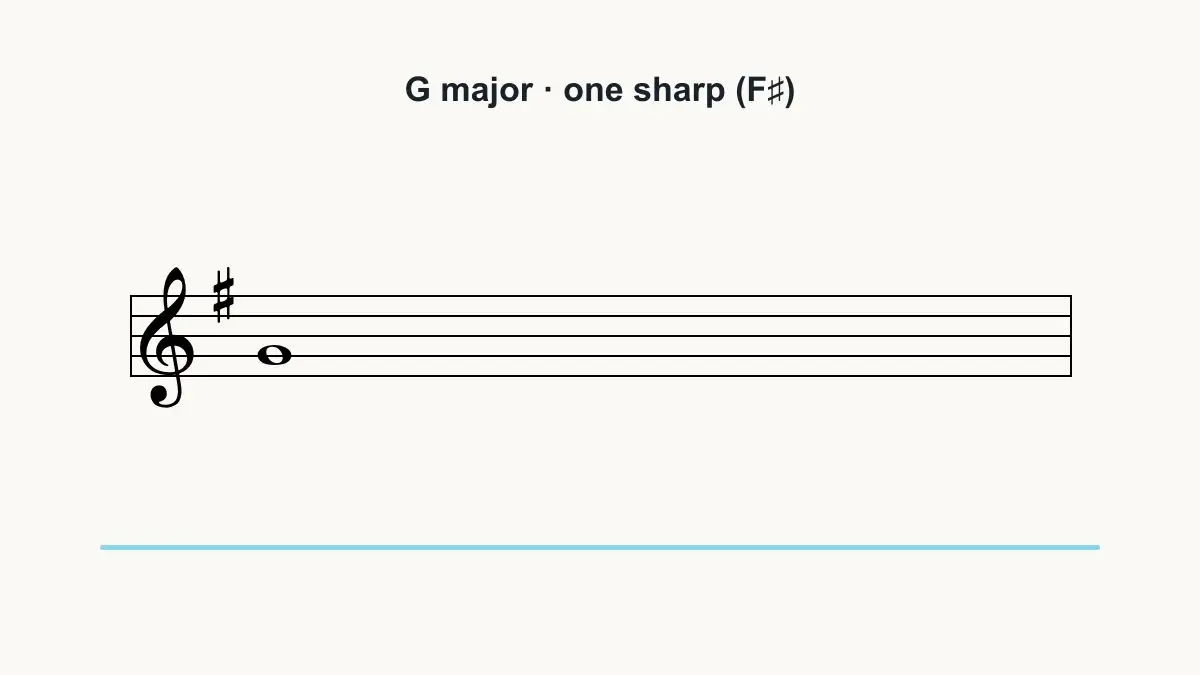
Before a key-signature quiz, students should sing or play the major scale that matches the signature. Hearing the tonal center makes sharps and flats meaningful rather than abstract symbols at the start of a line.
Use keyboard or solfege patterns for G major, F major, and D major early — keys that appear in beginner repertoire. When students know how the scale sounds, identifying the signature is a shortcut, not a separate skill.
Even students who do not play piano can point to scale steps on a keyboard diagram while singing — the visual helps more than a flat list of accidentals.
Order keys to match your curriculum
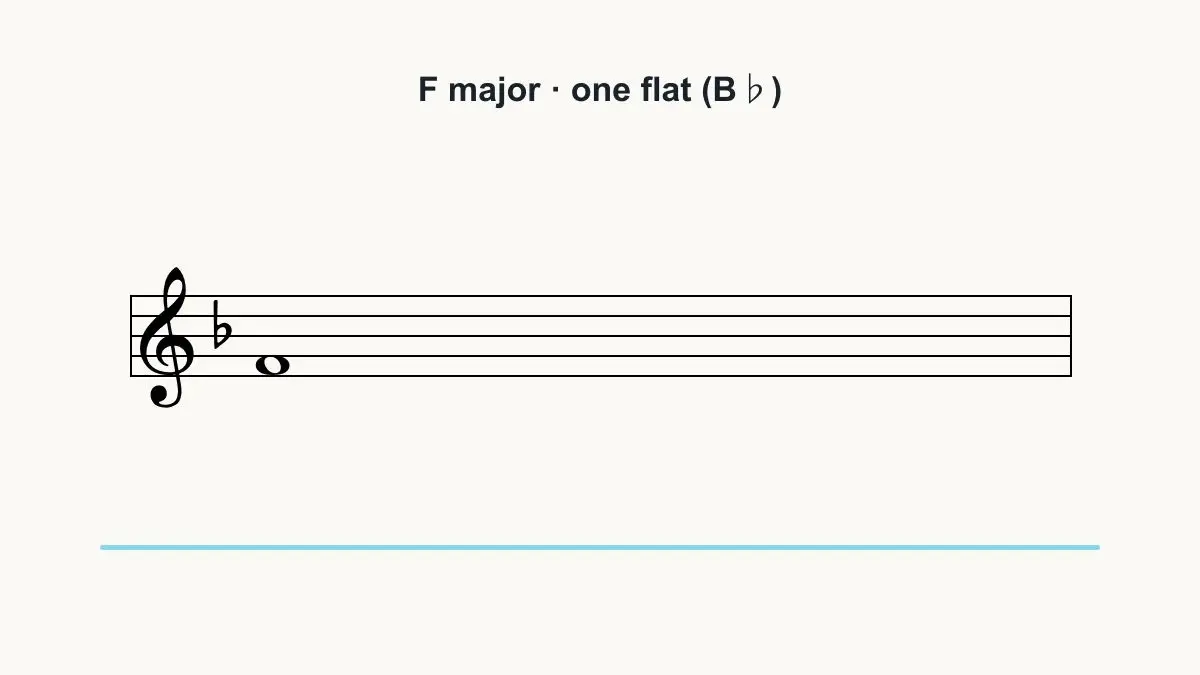
Introduce C and G major early, add F major, then expand through the circle of fifths as your method book or state expectations require. Do not dump all fifteen major keys in one unit.
Separate major and minor key worksheets when students confuse the two. Relative minor connections land better after major signatures are reliable.
Band and orchestra teachers often align key introduction with the concert keys in current literature — theory homework then matches rehearsal.
Teach patterns, not tricks alone
Order of sharps (F-C-G-D-A-E-B) and flats (B-E-A-D-G-C-F) should be taught as patterns students can reconstruct. “Last sharp, go up a half step” and “second-to-last flat names the key” are useful shortcuts after students understand why the pattern exists.
Have students write the sharp or flat sequence from memory weekly — thirty seconds at the start of class builds long-term retention.
Ask students to explain why G major has one sharp before they memorize the shortcut — understanding reduces panic on assessment day.
Use the circle of fifths as a map, not a poster
A circle on the wall helps visual learners, but active use matters more: human circle games, card sorts, and “name the neighbor key” drills. Link the circle to chord progressions and scale spelling when students are ready.
Generate key-signature identification worksheets focused on three related keys at a time (e.g., C, G, D) before mixing the full set.
Students who struggle with the full circle often succeed when you zoom in on one quadrant for a month.
For a deeper activity sequence, see our circle of fifths classroom guide — movement and sorting before any fill-in wheel quiz.
Assess with fresh worksheets
Generate a new key-signature identification sheet before each unit test so students demonstrate reading skills, not memorization of one PDF. Vary clef and key family to match what your ensemble actually reads.
Use wrong answers as a reteach signal: confusing F major with D minor often means relative minor needs its own lesson, not another lecture on sharps.
Pair identification with one written scale per key on a separate line of the test — spelling reveals understanding that circling a key signature alone might miss.
Common key signature mistakes
Teaching identification without connecting to scales or repertoire leaves students with shallow memorization. Introducing minor keys before major signatures are secure creates constant confusion between relative pairs.
Using one fixed worksheet all semester and ignoring bass clef are equally common — low instruments need signature practice in the clef they read on the stand.
Put it into practice this week
Open with a sung scale in the key of the day. Follow with a written sharp-or-flat order drill (30 seconds), then a five-signature identification worksheet generated fresh in Worksheet Studio.
Assign keys that appear in current repertoire only — if the concert is in G and D, those two plus C make a sensible homework set.
End the week with students teaching a partner how they remember the order of sharps — teaching cements retrieval better than silent study.