

How to teach rhythm counting
Rhythm counting clicks when students feel a steady beat before they write numbers under a measure. Teachers in our community pair one consistent counting system with movement, speaking, and short written drills — then print fresh rhythm worksheets so students practice reading, not memorizing one page. The sequence below works for general music, band, and choir; adjust the meter and note values to match the repertoire on your stand.

Establish pulse before notation
Before students count “1-and-2-and,” they need to feel where the beat lives. Clap a steady pulse while students march or tap — no sheet music yet. When the body keeps time reliably, notation becomes a label for something they already sense.
Ensemble directors often report that rhythm reading is the strongest predictor of sight-reading success. Investing a few minutes per class on pulse pays off when students face new repertoire.
Use a metronome sparingly at first; internal pulse from conducting and movement builds stronger reading than depending on a click alone.
Master note values before full measures
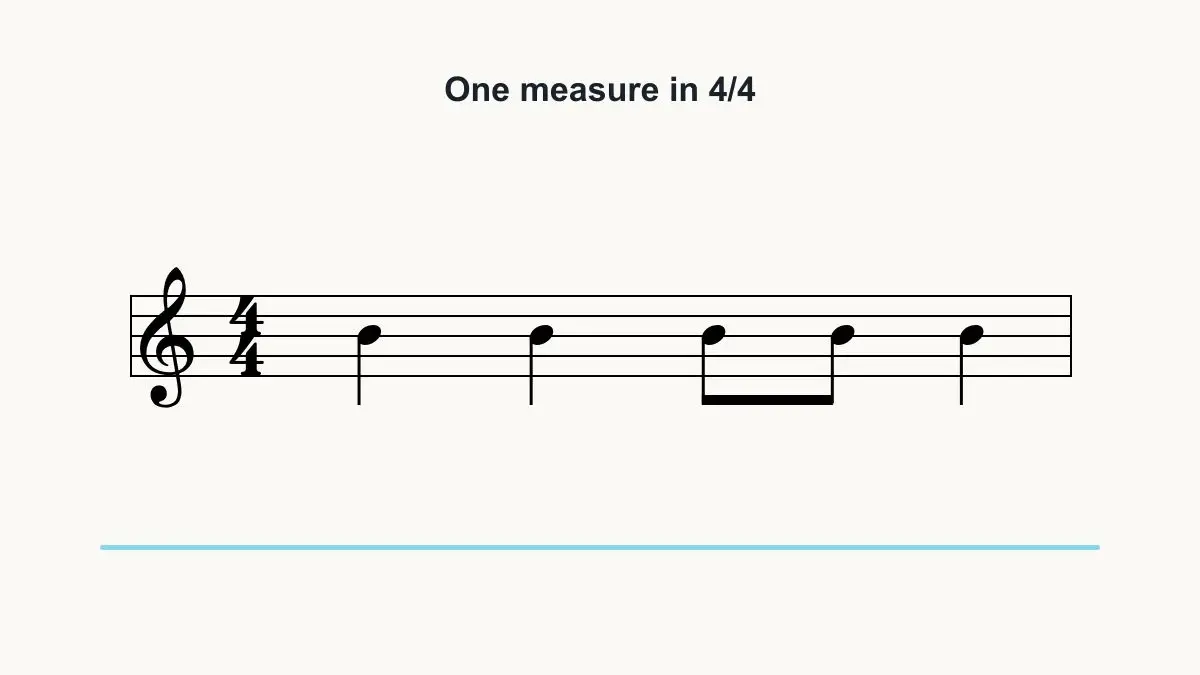
Confirm students know quarter, half, whole, and corresponding rests before asking them to count full bars. Use note-value identification worksheets for quick checks: “How many beats does this symbol get?”
Separate rhythm-value practice from pitch reading early. Mixed worksheets are useful later, but beginners decode symbols faster when each lesson has one clear goal.
Dotted values and ties can wait until straight values and rests are secure — add them when students count a full 4/4 measure without stopping.
Pick one counting system and stay consistent
Whether you use numbers (“1 2 3 4”), Kodály syllables, or “ta” and “ti-ti,” consistency matters more than which system you choose. Teach students to speak rhythms aloud before writing counts underneath.
Model counting through rests — the subdivision continues during silence so performers stay oriented in the measure. Clap-and-count without instruments removes tone and fingering from the equation.
Post the counting syllables you use on the board for the first month so substitutes and students share the same language.
Introduce meter one signature at a time
Start in 4/4 with quarters and halves, add eighths when the beat is steady, then introduce 3/4 when students can conduct a clear downbeat pattern. Compound meter (6/8) works best after simple meter feels natural.
Generate meter-specific rhythm worksheets rather than mixing signatures on one page. Students should know what the time signature tells them before they decode the rhythms inside it.
Conducting patterns help students feel downbeat and weak beats — physical motion makes 3/4 different from 4/4 before they explain it in words.
Isolate hard measures from repertoire
Pull one to three measures from the piece students are learning and count them in isolation. This mirrors how private teachers fix trouble spots without rereading an entire part.
Generate a rhythm worksheet in the same meter and note values as the passage. Fresh examples each week keep the skill honest.
Label the worksheet with the piece title when you hand it out — students see the connection between theory time and rehearsal.
Common rhythm mistakes to correct early
Students often rush rests, treating silence as “nothing” instead of timed space. Reteach that the counting voice continues through rests exactly as it does through notes.
Mixing counting systems mid-year, skipping spoken rhythms before pencil work, and reusing one photocopied page all term are other frequent pitfalls. Fix with consistency, oral practice, and fresh worksheets from Worksheet Studio.
Put it into practice this week
Monday: pulse and clap-only patterns with no notation. Wednesday: note-value or rhythm-value worksheet as an exit ticket. Friday: one full measure in 4/4 from the method book or concert piece — speak counts, then write.
Generate three rhythm worksheets at the start of the month with the same meter and note values but different measures. You will always have a fresh warm-up without redesigning the lesson.
Share one pattern with your ensemble directors or classroom teachers so counting language stays consistent across rooms — students transfer skills faster when vocabulary matches.