

Teaching guideKeys, scales & intervals
How to teach intervals
Intervals click when students connect staff distance to steps they can hear and spell. Teachers in our community start with generic interval number, add quality once half and whole steps are reliable, then use fresh identification worksheets for homework and unit review. This sequence matches how many AP and undergraduate theory programs scaffold the topic — number first, quality second, inversion last.

Half and whole steps before quality
Confirm students can find half and whole steps on the staff and keyboard before naming major and minor seconds, thirds, and so on. If step size is shaky, interval quality becomes guesswork.
Short drills — “find the half step in this measure” — work well before full interval identification pages.
Use the keyboard as a visual even in non-piano classes; half steps look like neighbors, whole steps skip one key.
Piano classes can compare two adjacent keys; wind and string students can use finger spacing on a silent instrument to feel whole versus half steps before naming intervals on paper.
Teach interval number before quality
Ask students to count lines and spaces between note letters first (generic third, generic fifth). Quality enters after number is automatic. This matches how many AP and college theory sequences scaffold the topic.
Use melodic intervals before harmonic when singing and hearing are part of your class — students hear the second pitch after the first.
Drill generic intervals in one key before adding accidentals that change quality.
When counting interval number, use the lower note letter as “1” and count letter names only — accidentals affect quality later, not the basic number between letters.
Add quality when number is steady
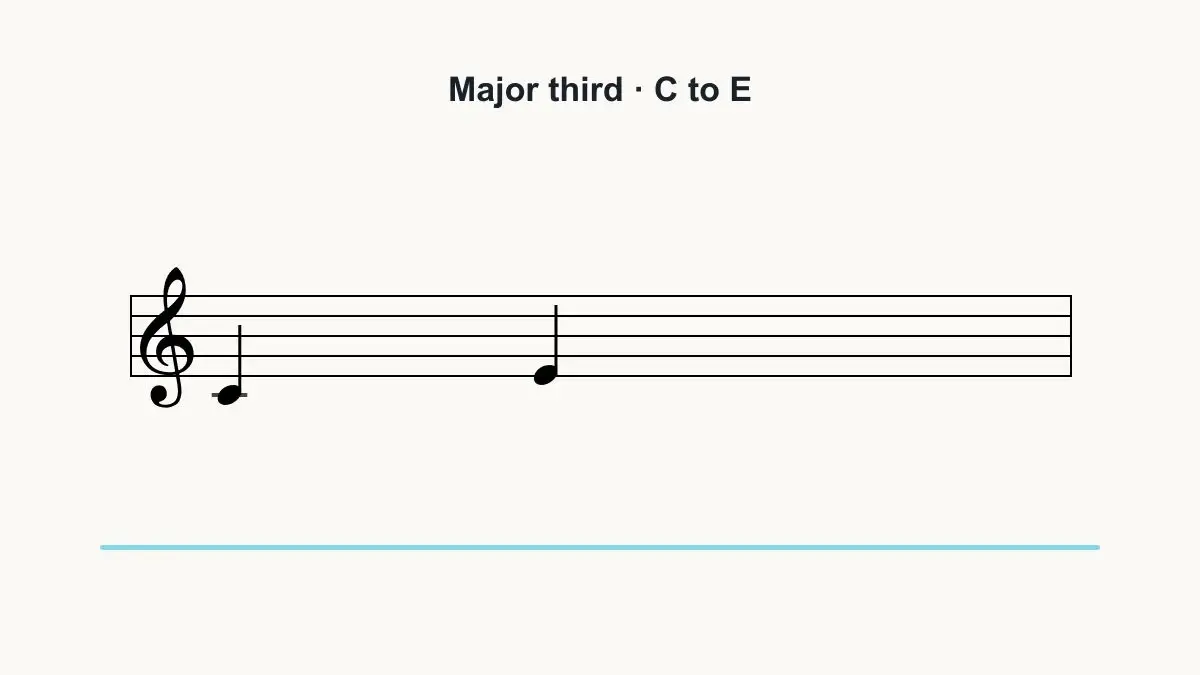
Introduce major and minor quality for seconds, thirds, sixths, and sevenths; perfect and diminished/augmented for fourths and fifths as your curriculum requires. One interval family per week beats everything at once.
Generate a new interval worksheet each week so students demonstrate reading, not memorization of one exercise.
Connect major thirds to major triads early — students see why interval quality matters for harmony later.
Anchor major and minor seconds with repertoire students know — the opening of a familiar tune can become your interval reference instead of another abstract drill.
Use listening to reinforce quality
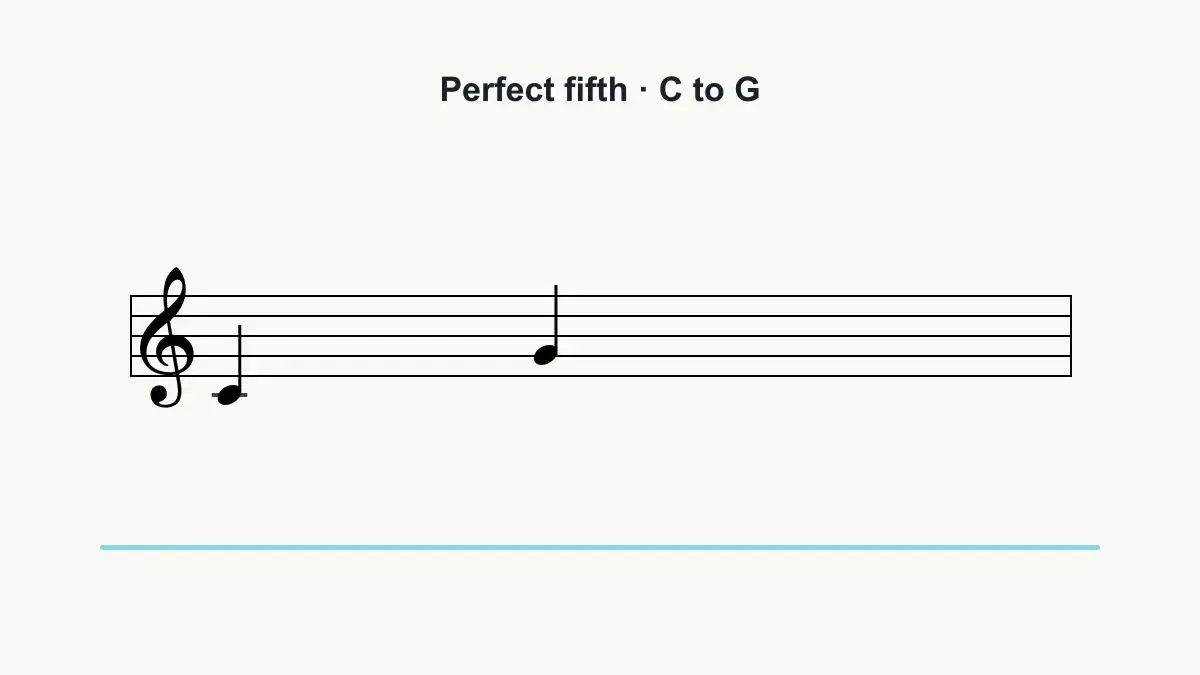
Sing intervals — especially thirds and fifths — before asking students to label them on paper. Call-and-response takes two minutes and anchors abstract symbols.
Do not skip ear work for choir and general music classes; band students also benefit from hearing the interval they are spelling.
Record short interval quizzes on your phone if you need consistent playback across multiple classes.
Pair listening with movement: step for seconds, skip for thirds, leap for fifths. Kinesthetic cues help elementary and middle school classes before abstract labels stick.
Introduce inversion after the core set is secure
Compound intervals and inversion rules can wait until seconds through octaves are reliable in the keys students actually play in. When you add inversion, connect it to the complementary interval sum (octave).
Separate worksheets for generic number, full quality, and inversion when students confuse the tasks.
Inversion is faster to teach when students already know complementary intervals by ear — a major sixth sounds like the flip of a minor third.
Pull intervals from the music students perform
Measure one of the concert piece and ask students to name the interval between the first two pitches — melodic for vocal lines, harmonic for keyboard or accompaniment figures when appropriate.
Match interval worksheets to the key and clef of current repertoire so accidentals look familiar, not random.
When students struggle on a leap in their part, isolate that interval in ear training before assigning a full identification page.
Common interval teaching mistakes
Teaching quality before students count staff distance accurately forces guessing. Only using melodic examples when ensemble music is harmonic leaves students unprepared for chord study.
Reusing one interval sheet for the entire unit and skipping the keyboard as a half-step visual are easy fixes — regenerate worksheets and show the piano diagram weekly.
Labeling intervals with only mnemonics (“my dog”) without staff counting breaks down on harmonic examples and altered pitches — keep letter counting as the primary skill.
Put it into practice this week
Monday: half- and whole-step scavenger hunt on one line of repertoire. Wednesday: generic interval number worksheet. Friday: add quality for one interval family only (e.g., thirds).
Generate interval drills in the key students are playing — accidentals make sense when tied to a familiar scale.
Record interval echoes at the start of class for two minutes before opening folders; listening first keeps worksheets from becoming pure symbol matching.