

Teaching guideNote reading & notation
How to teach note names on the staff
Note naming is often the first theory skill students need — and one of the most common questions in our teacher community. This guide outlines a classroom sequence built on guide notes and short, repeatable drills (not memorizing one mnemonic forever), plus worksheet ideas you can generate in seconds with matching answer keys. Whether you teach general music, band, choir, or private lessons, the same progression applies: narrow range first, fresh sheets often, and assessment that measures reading rather than photocopy memory.

Start with guide notes, not endless mnemonics
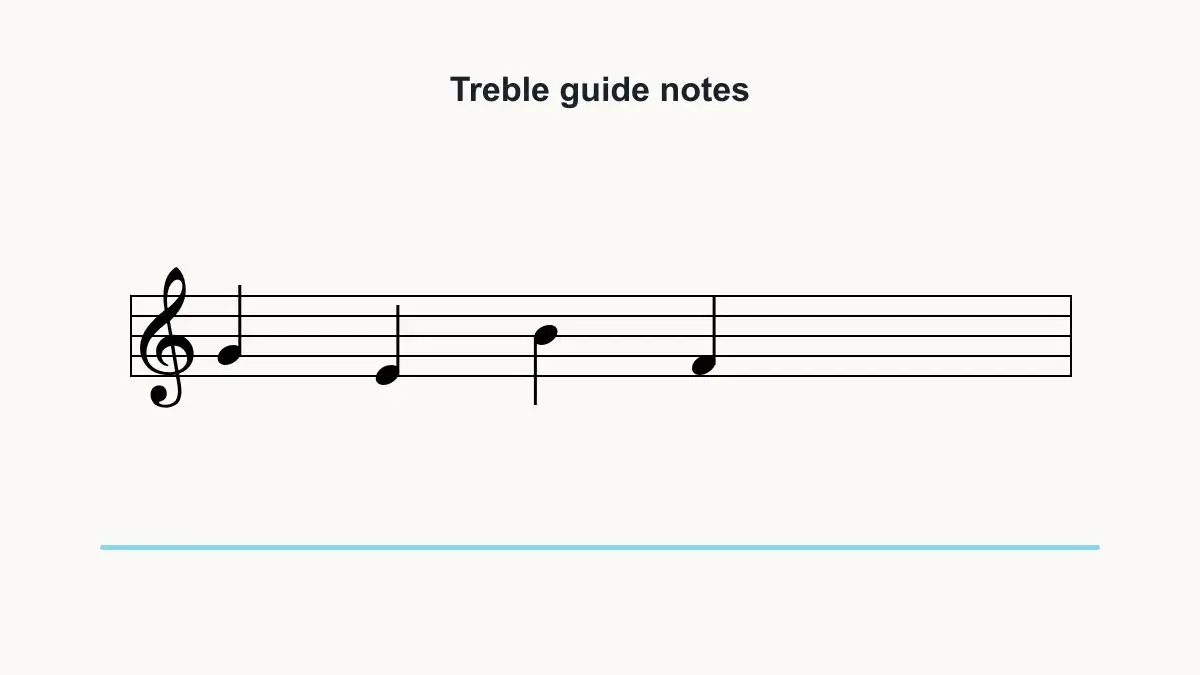
Mnemonics like “Every Good Boy Does Fine” can help students survive the first week, but many teachers find they break down once students face ledger lines, bass clef, or accidentals in real repertoire. Guide-note reading — anchoring on treble G and bass F, then reading by step and skip — tends to transfer better because it matches how students actually scan a line of music.
Professional reading programs emphasize landmark notes and repeated short exposure across a narrow range before expanding. That mirrors what ensemble directors see in method books: limited pitches first, then gradual extension. Your worksheets should follow the same curve.
When a student counts lines from the bottom on every note, they are using a mnemonic strategy whether or not they say “Every Good Boy” out loud. Redirect toward guide notes and neighbor steps as soon as possible.
Alto clef can wait for most programs until students read treble and bass reliably; when viola or alto clef appears in your curriculum, treat it as a third guide-note clef with its own narrow worksheet range.
A four-week teaching sequence
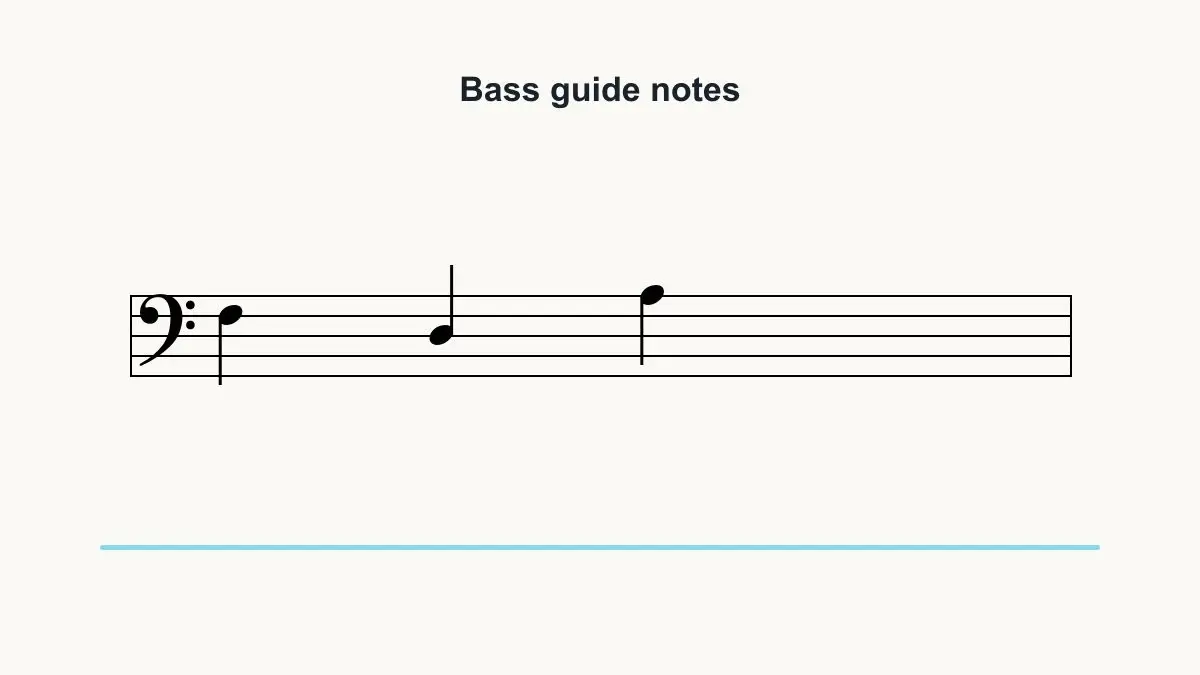
Week 1: Introduce the staff, clef, and two guide notes only (treble G on line 2, bass F on line 4). Students name those two notes on every example before adding neighbors.
Week 2: Add the lines and spaces immediately above and below each guide note — still one clef at a time. Keep rhythms simple (whole and half notes) so attention stays on pitch.
Week 3: Introduce the second clef for piano, band, or general music students who need it. Do not merge clefs until each is reasonably secure on its own.
Week 4: Add a few ledger-line notes (one line above/below) and, if your curriculum requires it, accidentals in a familiar key. Assess with a fresh worksheet so you measure reading, not photocopy memory.
After week four, spiral review with mixed worksheets but keep the range tight until assessment scores stay high for two consecutive checks.
Make naming active before the worksheet
Before students touch pencil to paper, have them trace note heads while saying names, finger keys on a silent keyboard, or slide a finger along the staff on a projected example. Movement and speech strengthen the same pathways used in sight reading.
Keep drills under two minutes: “Name these five notes” beats a full-page marathon when you are building fluency. Then assign a short printed sheet for independent practice at home.
In full ensemble, project one measure and have sections name only their pitches — flutes on treble, trombones on bass — so everyone practices the clef they read in rehearsal.
Differentiate without extra prep
Use the same lesson plan but generate easier worksheets (narrower range, fewer accidentals, one clef only) for students who need support and wider spans for students ready to move faster. Because Worksheet Studio produces a new layout each time, you can run the same Tuesday “note check” all semester without students memorizing one fixed PDF.
For low brass and other transposing instruments, match the written pitch range to what appears in their method book — including key signatures — so note-naming practice reflects the music on their stand.
Private teachers often keep one saved template per student level and regenerate before each lesson. The settings stay; the notes change.
Connect note naming to the music students play
Theory sticks when it is not isolated from repertoire. After guide notes are secure, pull measure one from a beginner piece and ask students to name only the first three pitches. They see why naming matters on the music they care about.
For band, use concert-pitch examples in the key of the method book. For choir, use the vocal line before asking students to name random drills. The worksheet then reinforces the same clef, range, and key they see in rehearsal.
Parents and administrators understand the assignment faster when you can say “this sheet matches the notes in their concert piece” — link the generator settings to your program music whenever you can.
Common mistakes to correct early
Skipping bass clef until “later” hurts piano and low-voice students who need both clefs early, even if you teach them separately.
Introducing ledger lines before the core staff is fluent leads students to guess instead of read.
Reusing one photocopied page all term means students memorize layout, not notation.
Teaching note names in isolation from rhythm — pair short naming drills with a steady pulse so reading feels musical.
Quick checks that tell you what to reteach
Use a five-note exit ticket twice a week: one clef, no accidentals, 30 seconds to name. Track which line or space confuses the class and reteach that pair the next day.
When students miss accidentals or key-signature notes, generate a worksheet in that key on purpose — the mistake is often context, not that they forgot a single letter name.
Keep a simple log of which notes or ranges trip the class each month. Your next worksheet settings should reflect that data, not a generic range pulled from last year’s folder.
Put it into practice this week
Monday–Tuesday: guide-note drills in one clef only. Wednesday: five-note exit ticket. Friday: fresh note-naming worksheet in Worksheet Studio with the week’s range settings.
Generate two versions — narrow range for support group, standard for the class — from the same template in under a minute.
Share one student-success metric with parents (“named 12/12 treble notes”) so home practice has a clear target.